
I love that our presbytery makes space for education hour.
This last Thursday at our presbytery gathering in Washington, we were blessed to have Rev. Dr. Aaron Stauffer, Associate Director of the Wendland-Cook Program in Religion and Justice at Vanderbilt University Divinity School, lead our education hour. During his presentation, he posed a wonderful challenge to our ministry communities of differentiating “Church Questions” from “God Questions.” Examples include:
God Questions:

- How is God calling us into deeper relationship with each other and the world?
- How might we more faithfully enact Christian life?
- In what ways is God changing our congregation?
Church Questions
- How can we get more people to attend?
- Why won’t people attend Adult Sunday School?
- How are we going to solve the budget shortfall, especially with the building needing such work?
These questions were also at the meal tables during our lunch break immediately following his presentation, and were shared to invite us into a wonderful challenge on how we can better direct our attention to what God is doing in our midst.
This presentation ignited my imagination and curiosity for the ways we seek God in our work. I found myself holding space for the value in sitting together in proximity with our “Church Questions” because they can be opportunities to unpack what God desires behind, underneath, and beyond our Church Questions. It’s possible there may be something divine in naming, confronting, and working together through the barriers of bubbling anxiety, buried grief, or unnamed fears in order to get to the God Questions beyond.
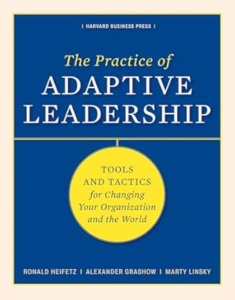 The seminal Heifetz text The Practice of Adaptive Leadership claims that that it is actually more important ask the right questions than look for the right answers. My concern is often times that many of meeting/committee/session spaces simply do not make space for God questions, even when we bring them with us, because the structure of those spaces is often specifically oriented towards coming up with answers. This can mean that at worse questions can cause impatience, and at best, the process of asking questions is often mistakenly of value ONLY if they lead to clear answers.
Now, this isn’t permission to spin our wheels! The point is that there is a deeper hidden value in the habit and process of asking questions. There is value in holding SPACE for each other to allow our imaginations to open and the divine to fill in. Too many times I have seen meeting spaces try to ask the right questions, but there is too much anxiety, too much fear, too much distrust filling the spaces before the divine can fill in. We are so eager to fill the space with our answers that we cannot even raise the questions in the first place.
I like to do an exercise with sessions and church leaders where I will challenge them to brainstorm a list of as many questions about their ministry as possible. It almost always starts out great, and yet, almost every single time, I will need to interrupt about halfway through the exercise because a shift has already happened when people are answering the questions being lifted up, and then discussing the answers, closing the space prematurely! We just can’t help it!
Questions, by their own inherent design, do something powerful in the creation of space. I think about the first Genesis creation story and how God goes about filling the world. Notice how God creates the space before that space is filled. (God first creates the dome, then fills it with water…God first creates the dry land, then creates the vegetation…God first creates the waters, then creates the sea creatures…God first creates the land of vegetation, then creates four legged creatures, etc.) I wonder if too often we try to ask questions but without creating the space needed for us to truly listen and be attentive to each other and what God is doing without the pressure of needing to fill the space with our answers.
Here are a few God Questions that may help give attention to creating space for even more God questions:
- How is God delighting in your work?
- What today has brought you joy and energy?
- Where are we feeling the kin-dom of God appearing in our work together?
- Where may we be feeling distant from God and each other?
- (considering the first four) What patterns do you notice in answering these questions repeatedly over time? Does anything keep coming up? What’s that about?
- What percentage of our structured meeting/committee/session times go to 1) prayer and worshipful reflection, noticing how God is working in each of us, and 2) what percentage goes to getting our business done? (I’m remembering a challenge once to make your session meeting 50% prayer/listening/noticing!)
- What percentage of our time together is engaging 1) our heads, 2) our hearts, and 3) our bodies?
- What values have we been embodying by our work? (Do the actual values match our expressed values?)
- What Scripture story best tells the story of where we may feel we are on our organization’s journey right now?
- Where in the Wilderness narrative, from Exodus to arrival in the metaphorical Promised Land, do we feel we are right now? (What specific scripture lessons in that time feel particularly resonant?)
- Who is our neighbor? How have we exchanged love with our neighbor? What opportunities to exchange love with our neighbor may we have missed?
These kinds of questions create space to notice the divine moving alongside of us, and they can challenge us to create the kinds of space to make asking these questions a part of our life together. How can we make building a routine of tending to God questions a part of our sacred work together?
I encourage us, on every level of the church to focus on how we can make space–regular, intentional space–to be fully present with all of humanity, all of our brokenness, making space for us to acknowledge how we are in this together—making less space for answers and more space for questions.
Because the chances are that the divine answer will show up in the form of a question!
Ryan
Rev. Ryan J. Landino
Presbytery Leader, Presbytery of Giddings Lovejoy
rlandino@glpby.org
Direct line: 314-409-9002